
Analysts attribute this fall to the recent moderation in energy (mainly crude oil) and commodity prices, lowering of input costs for companies in sectors such as FMCG, consumer durables, and automobiles, reports Krishna Kant.

The rates of price rise in many services used by the common man, including hospital and nursing, cook, domestic help and bus (fare), among others, have also touched double digits during the last four years, putting a burden on disposable income.
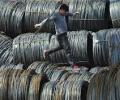
The govt has hiked customs duty for metallurgical coke.

Indian economy was growing faster than the global average and all other major economies: FM

Dipak Haksar, bottom, left, chief executive, ITC Hotels and WelcomHotels, tells Ajay Modi that FY19 is going to be a year of strong growth, and tariffs are likely to see a substantial improvement in the fourth quarter

The need for larger investment in infrastructure that is the biggest shortcoming, says A V Rajwade.

Stating that India's economic stimulus was not adequate, Banerjee said, the measures did not increase consumption spending of lower income people as the government was not willing to put money in the hands of the low income population.

There was a plan to increase the Railways' revenue by augmenting carrying capacity. This target has, however, become the source of a bitter battle between two ministries - the railways and steel - and provoked serious arguments over the "Make in India" programme.
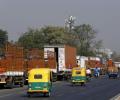
The industry said if the policy was announced, it would have taken 28 million vehicles bought before March 2005 off the road.

Prime Minister Narendra Modi on Saturday hard sold his government's reforms spanning from manufacturing to taxation to labour, saying they have changed the world perception about the country from 'why India' to 'why not India' and went on to quote record foreign investment during the pandemic as a testimony to that. Speaking at industry association Assocham's Foundation Week event, Modi also said agriculture reforms brought by his government six months back have started benefiting farmers. The reforms in the last six years have influenced in changing the sentiment of the industry from 'why India' to 'why not India' in investing.

Nitin Desai suggests some concrete measures to revive investment and boost growth.
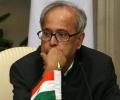
The President noted that the green shoots of recovery were already visible, with the economy growing at 5.7 per cent during the first quarter of current fiscal.
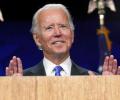
The nominees are Congresswoman Deb Haaland as Secretary of Interior, Jennifer Granholm as Energy Secretary, Michael Regan as administrator for Environmental Protection Agency and Brenda Mallory as Chair of the Council of the Council on Environmental Quality.

While the Budget might have been a sentiment booster for the sector, firms with market dominance emerge as favourites.

All India Congress Committee General Secretary Sanjay Nirupam on Saturday threatened to immolate himself if his demand for reduction in power tariff in Mumbai was not accepted.
'We have the geographic advantage, demographic advantage, we have the necessary technical skills.' 'We just have to get all of these together. Then, we can very well compete.'

IT and pharma companies again save the day; mask pain in domestic consumption.

In fact, no other recent Union Budget has held so much significance for the Indian economy as the one to be presented in about six weeks from now, notes A K Bhattacharya.

'Considering that an Internet company's market value is largely determined by its direct access to consumers for digital services, and largely served outside a sovereign country's control, it would appear reasonable in trade terms to discuss fees for a seat at the proverbial 'table' of opportunities in the largest open consumer market,' argues Venki Nishtala.

SEZs account for just about a third of India's merchandise exports (and roughly the same proportion of services exports). Yet, the notion of creating global manufacturing centres of the kind that propelled China to superpowerdom retains a durable appeal within the Indian policy-making establishment, notes Kanika Datta.

'Long-term retail investors should not worry about these sharp dips and jumps if they have chosen their stocks wisely.' 'Short-term volatility is a given and a rise and fall of two-three per cent should not worry them.'

The postponed Olympic Games will now begin on July 23 next year and run until August 8, the head of the Tokyo 2020 organising committee said on Monday, as the coronavirus pandemic made it impossible to plan and prepare for them properly this year. The Games were postponed last week - the first such delay in the 124-year history of the modern Olympics. The move was a huge blow for Japan, which invested $13 billion in the run-up to the event and raised $3 billion from domestic sponsors.

We could be on the brink if our export industries actually start losing jobs, says Shreekant Sambrani.
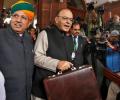
Following the Budget being announced by Finance Minister Arun Jaitley, leaders across the political spectrum provided their views.
While foreign currency rating was retained at Baa2 -- the second-lowest investment grade score -- Moody's also projected a fiscal deficit of 3.7 per cent of gross domestic product in the year through March 2020, a breach of the government's target of 3.3 per cent.
.jpg)
'Mining jobs get created in the most backward districts of India's poorest states,' says Anil Agarwal.

The government kept its nerve in the face of a massive shock. It chose not to resort to a massive fiscal stimulus. It focused instead on providing liquidity support and easing restrictions on movement in stages, observes T T Ram Mohan.

The 30-share Sensex and the 50-share Nifty ended flat at the mark of 29,008 and 8,767 respectively.
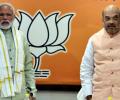
Corporate leaders said a stable government at the Centre will help boost infrastructure spend, address agricultural distress, and encouraging employment.

ADB projected China's growth to decelerate from 7.4 per cent

Supported by slightly stronger global growth, improving export competitiveness and implementation of recently approved investment projects, India's growth is expected to recover from 4.4 per cent in 2013 to 5.4 per cent in 2014, the IMF said.

'They want (the ownership and management of PSU banks) to pass into the hands of a private sector entity.' 'Ownership of these banks will go from the public sector to private sector.'

The size of the GDP in the second quarter of 2018-19 is estimated at Rs 33.98 lakh crore, as against Rs 31.72 lakh crore a year ago
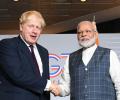
'We don't need to hinge India-UK relations on shared hostility toward China,' observes Ambassador M K Bhadrakumar.

REITs, a new investment avenue in India on the lines of one in developed markets like the US, UK, Japan.

Welcoming the latest round of stimulus announced by Finance Minister Nirmala Sitharaman on Thursday, experts said the measures will support the economic recovery boosting demand, job creation and by providing funds to the MSME and stressed sectors. The fiscal impact of the stimulus is likely to be around 0.25-0.6 per cent of GDP in the current fiscal, they said.

The government had committed to increasing spending in infrastructure
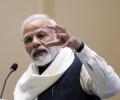
Starting today, Modi and top officials in the Prime Minister's Office will be briefed by various central ministries and departments on their plans as well as agenda for the next five years. They will also apprise the PMO of the work they have done so far in realising the agenda of government's second term in office.

Tax incentives to have cascading effect on the capital goods industry.
